Leave Your Message
-
 Emailgrace@simonslighting.com
-
 WhatsApp

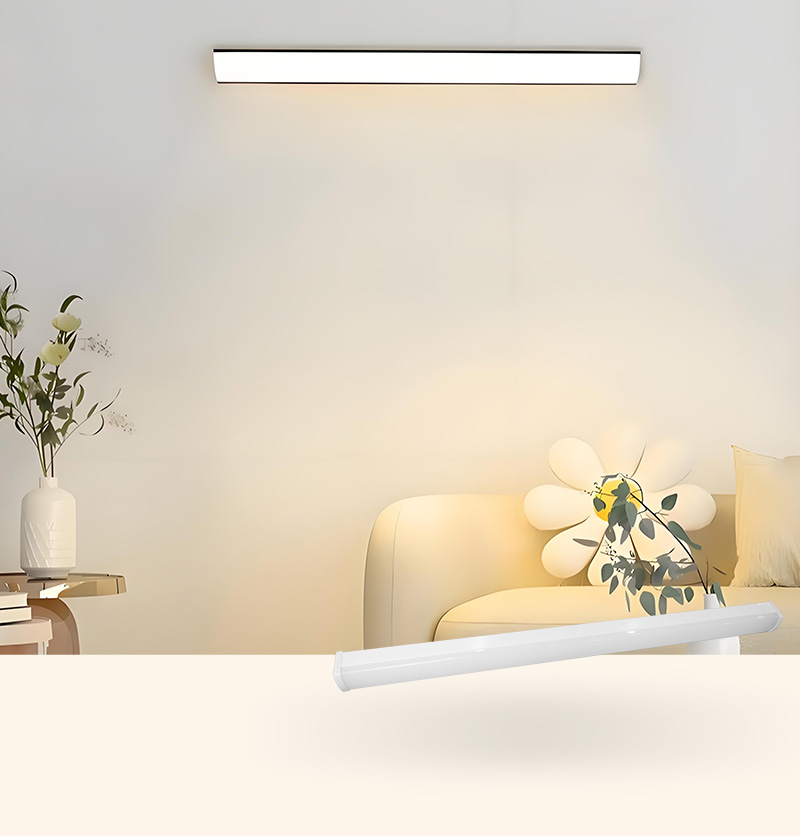
The German lighting market is undergoing a profound transformation driven by the country's ambitious Energiewende (energy transition) policies, strict European Union environmental mandates, and the rapid expansion of smart industrial infrastructure. In this evolving landscape, the demand for high-efficiency, dimmable LED batten lights has surged. These versatile fixtures, historically known as fluorescent tube replacements, have evolved into highly sophisticated, intelligent lighting systems that serve as the backbone of modern German industrial, commercial, and public spaces.
According to German federal building regulations (Gebäudeenergiegesetz - GEG) and the EU Ecodesign Directive (ErP), traditional, inefficient lighting systems must be phased out in favor of intelligent, dimmable LED technologies. This shift has positioned dimmable batten lights as a critical component in reducing carbon footprints and lowering operational costs across German enterprises.
Germany stands as Europe’s largest industrial powerhouse, home to massive automotive assembly plants, automated logistics hubs, and high-tech manufacturing corridors. These environments require lighting systems that offer not only exceptional brightness but also precise control. Dimmable batten lights address this need by allowing facility managers to adjust illumination levels dynamically based on shift schedules, natural daylight availability, and specific task requirements.
In regions like Baden-Württemberg and Bavaria—the heartlands of German automotive and machinery manufacturing—factories are increasingly adopting "smart factory" or *Industrie 4.0* standards. Here, lighting is integrated into the central building management systems (BMS). Dimmable batten lights equipped with DALI-2 (Digital Addressable Lighting Interface) or wireless protocols like Zigbee enable automated dimming, real-time energy monitoring, and predictive maintenance scheduling. This level of control helps companies meet the stringent DIN EN 12464-1 standard, which regulates lighting requirements for indoor workplaces to ensure employee safety, visual comfort, and productivity.
Several key trends are driving the development and adoption of dimmable batten lights in Germany:
Understanding how dimmable batten lights are deployed locally helps clarify why selecting the right vendor is crucial for German projects:
1. Mega Logistics Hubs (e.g., Frankfurt Airport & Hamburg Port Districts): These facilities operate 24/7. Dimmable batten lights with high luminous efficacy (typically above 140 lm/W) and robust IP65 ingress protection are installed to withstand dust and moisture. Dimming capabilities ensure that during low-traffic night hours, energy consumption is kept to an absolute minimum.
2. Precision Craft Workshops (Handwerksbetriebe): Throughout Germany's *Mittelstand* (small and medium-sized enterprises), local workshops require high-CRI (Color Rendering Index > 80 or 90) lighting for detailed tasks like painting, welding, or quality inspection. Triac or 1-10V dimmable batten lights allow craftsmen to adjust light levels to eliminate glare and reflections on metallic surfaces.
3. Public Infrastructure & Multi-Storey Car Parks (Parkhäuser): Safety and visibility are paramount in German public parking structures. Vandal-resistant, dimmable LED batten lights (rated IK08 or higher for impact protection) with built-in emergency battery backups ensure continuous operation. They dim during low-use periods but brighten instantly when vehicles or pedestrians enter the zone.
German engineers, electrical contractors, and wholesale distributors are known for their uncompromising stance on quality and compliance. Before committing to large-scale procurement for commercial retrofits or new construction projects, requesting a free sample dimmable batten light is a standard industry practice. This allows local buyers to verify several critical technical parameters:
First, it allows for compatibility testing with local dimming systems. Germany has a highly developed infrastructure of dimmer switches and central control protocols (such as Busch-Jaeger, Gira, or Jung dimmers). Testing a physical sample ensures there is no visible flickering or audible buzzing across the entire dimming range (from 1% to 100%). Second, it allows engineers to evaluate the thermal management of the fixture. High-quality aluminum heat sinks are vital for ensuring the LED chips do not overheat, which guarantees the 50,000+ hour operational lifespan expected by German clients. Finally, it ensures the ease of installation—such as tool-free loop-in/loop-out terminal blocks—which significantly reduces labor costs during onsite installation.